

You are close to the end of your psychology degree and have to settle on a thesis topic. The field is enormous, and that is exactly what makes the choice hard: cognitive research, clinical psychology and industrial-organizational psychology each come with different methods, different samples and different hurdles.
You find a psychology thesis topic fastest by first fixing the subfield you will be examined in, and then looking for a research question that works with a validated questionnaire and a sample you can actually reach in one semester. By the end of this page you will have three to five topics worth taking to office hours.
📌 The key points at a glance
- 179 psychology thesis topics, sorted into 11 subfields.
- The subfield decides your method, your sample and your workload.
- Free validated scales come from the public-domain IPIP pool.
- In the United States, an IRB normally reviews studies with people.
- A topic without a reachable sample is not a topic.
Create a survey for free
With empirio.ai you can create a modern online survey in minutes — free to start.
- AI-built survey
- Adjust by drag & drop
- Real-time analysis
In 4 Steps to the Perfect Topic: How to Find a Topic for Psychology
A topic for psychology comes together in four steps: pick the subfield, sharpen the question, check what is feasible, then get feedback. The order matters, because every step narrows the next one. Anyone who starts with the research question and only asks at the end who takes part usually has to start over.
A topic suggestion is a starting point, not a finished title. “Test anxiety: causes and coping” becomes a thesis only once population, measure and comparison are fixed. How that narrowing works is covered in the guide on how to find a topic for your bachelor’s or master’s thesis.
- Pick the subfield. Check first which faculty in your department supervise theses, and which subfield your program examines you in. A neuroscience topic will not help you if the department only staffs industrial-organizational and social psychology. Faculty pages usually list ongoing projects, and a thesis that attaches to one gets better supervision.
- Sharpen the question. Turn the topic into a question with two variables and a direction. Instead of “social media and self-esteem”, ask whether daily time on Instagram is associated with self-esteem among high school seniors. Only that form can be tested, and only it shows which data you need.
- Check what is feasible. Work out how many participants you can realistically recruit and whether a ready-made measure exists for your construct. Clinical samples, minors under 18 and people in hospitals or correctional facilities need access through an institution, and that takes weeks rather than days.
- Get feedback. Bring two or three ideas to office hours, not one. With several ideas the conversation becomes a choice; with one it becomes a yes or a no. Ask your advisor which methods the lab expects.
From the psychology topic to the thesis title
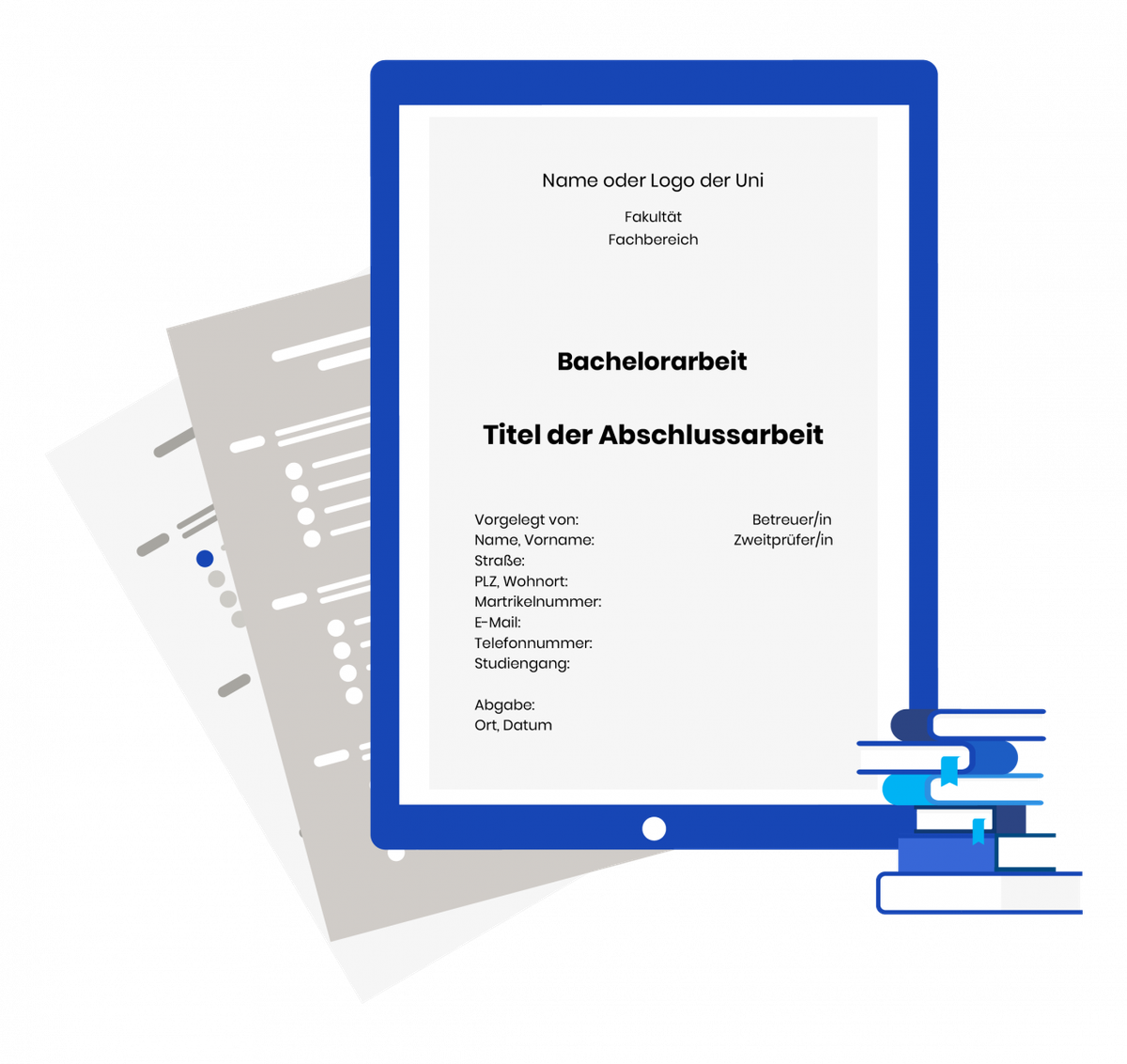
Between your topic and the title of your thesis sits one more step. A title names the population, the constructs and often the method, while a topic names only the subject matter. Keeping the two apart saves you a round of corrections later, because the title on the cover page has to match the research question in your methods chapter.
Tip
Write your working title in one sentence and cross out every word that is not a variable, a population or a method. What survives is the core of your thesis. Wording help for that step sits in the article on formulating the title for bachelor’s and master’s theses.
179 Psychology Thesis Topics: How This List Is Sorted
The 179 psychology thesis topics in this article are sorted by the eleven subfields that psychology programs teach, not by buzzwords. The reason is practical: your department files the thesis under a subfield, and the subfield decides which method is expected and which literature counts as the foundation.
Four of these subfields are usually taught as core areas, the rest as applied areas. That split is more useful for choosing a topic than any other: core topics can often be studied in a lab or with an online study of students, while applied topics usually need access to a field such as a school, a company, a club or a clinic.
| Subfield | What it looks at | Topics |
|---|---|---|
| Cognitive Psychology | Perception, memory, attention, thinking | 16 |
| Developmental Psychology | Change across the lifespan | 16 |
| Social Psychology | Behavior in groups and toward others | 16 |
| Biological Psychology and Neuroscience | Brain, hormones, effects of brain injury | 16 |
| Clinical Psychology | Mental disorders, assessment, treatment | 18 |
| Health Psychology | Health behavior and prevention | 16 |
| Industrial-Organizational Psychology | Work, leadership, teams, hiring | 17 |
| Educational Psychology | Learning, teaching, school, motivation | 16 |
| Sport and Exercise Psychology | Performance, motivation and strain in sport | 16 |
| Forensic Psychology | Testimony, evaluations, offending, prisons | 16 |
| Environmental Psychology | Behavior in spaces and toward the environment | 16 |
The suggestions are deliberately short. Each one names the subject matter and leaves open which population and which instrument you work with, because that depends on your university and your access to a field.
Note
A suggestion from a list is not a topic you hand in unchecked. Ask in your department whether theses on the same question already exist. A question that has been worked on three times in the same lab is often turned down, even when nothing is wrong with it.
Topics from the Core Areas of Psychology
The core areas of psychology study general regularities in experience and behavior, so perception, memory, development, social behavior and the biological basis underneath. For a thesis these areas are often the easier route, because the sample may usually consist of students and the data collection runs without a cooperation partner.
The drawback of the core areas is competition. Thousands of studies exist on the classic effects, and a plain replication rarely earns a strong grade. The stronger theses test a known effect in a new context, for example the cost of interruptions not in a lab but in the everyday study routine of undergraduates.
Cognitive Psychology: 16 topics
Cognitive psychology asks how people take in, store and process information. Experiments dominate here, often with reaction times or recall performance as the dependent variable. Without a lab at your disposal, many of these questions still work as an online experiment or as a diary study running over two weeks.
- Sleep quality and memory performance in college students
- Cognitive biases in everyday financial decisions
- Stress as a disruptor of attention and working memory
- Selective attention: what people miss under time pressure
- Background music and concentration while studying
- Mental rotation: practice effects over several weeks
- Cognitive load and the number of open browser tabs
- Reading on screen versus reading on paper: recall compared
- Learning a second language as an adult: limits of the critical period
- Decision fatigue over the course of a working day
- False memories: how leading questions reshape recall
- Time perception during boredom and during flow
- Overconfidence in planning your own study time
- Priming effects in the perception of consumer products
- Push notifications: the hidden cost of every interruption
- Reasoning errors with probabilities in everyday life
Developmental Psychology: 16 topics
Developmental psychology looks at change across the lifespan, from infancy into old age. Work with children needs parental permission and usually access through a preschool or school, which means several weeks of lead time. Surveys of parents, of teachers or of adults reporting back on their own childhood move much faster.
- Early attachment and later relationship quality
- Social media use and self-esteem in adolescence
- Moral reasoning in elementary school children
- Birth order and social skills among siblings
- Language development in toddlers and how often parents read aloud
- Early childhood education programs and school readiness
- Risk taking in adolescence and the search for identity
- Resilience in childhood: protective factors in family life
- Screen time rules in families and the conflicts around them
- Grandparents as attachment figures in early childhood
- The move from preschool to kindergarten seen from the child’s side
- How preschoolers develop an understanding of time
- Puberty and sleep rhythm: consequences for school performance
- Life satisfaction in old age: the paradox of aging
- Only children and their friendships with peers
- Parental divorce and the coping strategies of children
Social Psychology: 16 topics
Social psychology studies how the presence and behavior of other people shape your own experience. Many of the classics of the field would not pass an ethics review today and cannot be repeated. Vignette studies are the interesting route for a thesis instead: you vary described situations systematically and compare the reactions to them.
- Group dynamics in decisions made by small teams
- Stereotypes in hiring and resume screening
- Social facilitation: performance while being watched
- Social identity and conflict between groups
- Obedience to authority: how the Milgram studies are read today
- Prosocial behavior: when people help without being asked
- Social media and political opinion formation
- Partner choice: psychological factors behind attraction
- Social exclusion and its effects on well-being
- Cross-cultural communication: where misunderstandings start
- Peer pressure in adolescence
- Advertising and the shifting of social norms
- The bystander effect in emergencies
- Conspiracy beliefs and a felt loss of control
- Online anonymity and disinhibition in comment sections
- The contact hypothesis: encounters and declining prejudice
Biological Psychology and Neuroscience: 16 topics
Biological psychology and neuroscience connect behavior with its physical basis, so with brain activity, hormones and the consequences of brain injury. Without access to a lab or a rehabilitation clinic, a bachelor’s thesis in this area usually ends up as a literature review or a secondary data analysis. Clarify that access before you commit.
- Neuroplasticity after stroke and rehabilitation strategies
- Multitasking and the load on working memory
- Early detection of neurodegenerative disease
- Cognitive rehabilitation after traumatic brain injury
- Neurobiological foundations of addictive behavior
- Meditation and measurable changes in brain activity
- Aphasia: how language recovery progresses
- The prefrontal cortex and impulse control
- ADHD: neuropsychological test profiles compared
- Memory disorders from amnesia to age-related decline
- Visual perception disorders after brain injury
- Neurochemical foundations of mood disorders
- Pain perception: how the brain processes it
- Chronic stress and cortisol regulation
- Sleep deprivation and executive function
- Developmental neuropsychology: how attention matures
Topics from the Applied Areas of Psychology
The applied areas of psychology carry the knowledge of the core areas into a practice field, so into clinics, health, work and school. Topics from these areas look more tangible on a cover page and are popular for that reason, which means nearly everything hangs on one question: can you get to the people you want to say something about?
A survey inside a company needs sign-off from management and often from human resources, a study in a school needs permission from the principal and the district, and a project in a clinic needs the agreement of the institution plus IRB review. Plan several weeks for those routes and ask about them before you write a proposal.
Clinical Psychology: 18 topics
Clinical psychology deals with how mental disorders develop and how they are assessed and treated. It is the most popular subfield of all and at the same time the most tightly regulated: as a student you are not licensed to diagnose, and information about an individual’s mental health is sensitive. Surveys in the general population on strain, knowledge, attitudes and stigma work well.
- Effectiveness of cognitive behavioral therapy for anxiety disorders
- Dropping out of therapy: reasons from the client’s perspective
- Burnout in health care professions: prevalence and prevention
- Social isolation and mental health in older adults
- Virtual reality in the treatment of specific phobias
- Early detection of mental disorders in adolescence
- Personality traits and eating disorders
- Post-traumatic stress disorder: predictors of its course
- Chronic pain and co-occurring mental health conditions
- Online psychotherapy: building a working alliance over video
- Waiting times for a therapy appointment and their consequences
- Borderline personality disorder: treatment approaches compared
- Family members of people with mental illness: burden and relief
- Cognitive deficits in schizophrenia
- Stigma around mental illness in the workplace
- Mindfulness-based approaches in relapse prevention
- Mental health apps: use, dropout and expectations
- Obsessive-compulsive disorder: treatment success and relapse risk
Health Psychology: 16 topics
Health psychology asks why people behave in ways that help or harm their health, and how that can be changed. The field is generous for theses, because behavior, intentions and beliefs can be captured with established models and ready-made questionnaires. Keep one line clear: you ask about behavior, you do not diagnose illness.
- Psychological factors behind healthy eating
- Stress management and cardiovascular health
- Adherence to treatment in chronic illness
- Preventing type 2 diabetes from a psychological angle
- Social support and recovery after surgery
- Mindfulness training and mental well-being
- Quitting smoking: how well psychological interventions work
- Self-efficacy in health promotion
- Health literacy and the use of preventive care
- Vaccination decisions: trust and risk perception
- Sleep and quality of life among working adults
- Fitness apps and step counters: effects on physical activity
- Health communication in public campaigns
- Habit formation: how new routines become stable
- Alcohol use in college: motives and social norms
- Coping with a diagnosis: searching for information online
Industrial-Organizational Psychology: 17 topics
Industrial-organizational psychology studies experience and behavior at work, from hiring through to leadership. Anyone with access to a company through an internship, a side job or family can collect original data here with reasonable effort. Without that access, surveying employees through professional networks or an online panel remains an option.
- Working from home and job satisfaction
- Leadership styles and team performance
- Office design and everyday motivation at work
- Being reachable after hours and the ability to recover
- Diversity in teams: effects on collaboration
- Organizational change and employee engagement
- Emotional intelligence in leadership roles
- Conflict in teams: strategies for de-escalation
- Reward systems and willingness to perform
- Organizational culture and everyday behavior
- Workplace bullying: recognizing it and stepping in
- Autonomy, feedback and job satisfaction
- Hiring: how much a job interview really predicts
- The four-day week: expectations and perceived workload
- Onboarding new hires and retention in the first year
- Shift work and health
- Artificial intelligence at work: acceptance and worries
Educational Psychology: 16 topics
Educational psychology deals with learning, teaching and motivation in schools, colleges and training programs. Surveying K-12 students needs permission that runs through the principal and the district, and parental consent on top. Without that route, teachers, teacher candidates, parents and college students remain as samples, and a large share of these topics can be handled with them.
- Raising learning motivation in the classroom
- Digital devices and attention in class
- Learning strategies and exam performance
- Parental involvement and school achievement
- Gender stereotypes and the choice of subjects
- Bullying at school: prevention within the class
- Testing accommodations and performance anxiety
- The teacher and class relationship as part of the learning climate
- Promoting self-regulated learning
- Class size and participation in lessons
- Forms of feedback and achievement over time
- Test anxiety: how it develops and how students cope
- Building social skills in the classroom
- Emotional intelligence and school success
- Socioeconomic status and educational opportunity
- Artificial intelligence as a study aid in school
Create a survey for free
With empirio.ai you can create a modern online survey in minutes — free to start.
- AI-built survey
- Adjust by drag & drop
- Real-time analysis
Topics from Sport, Forensic and Environmental Psychology
Sport, forensic and environmental psychology are smaller applied fields that are not staffed in every department. That is precisely where the opportunity sits: these topics have been worked on less often, and your own access to the field is often already there, through a team you play in or an internship you have done.
Check in advance whether a faculty member will supervise the work. If the field is not represented in your department, a topic can often be bridged into one that is: club loyalty as a question for social psychology, climate anxiety as a question for clinical psychology, false confessions as a question for cognitive psychology.
Sport and Exercise Psychology: 16 topics
Sport and exercise psychology studies performance, motivation and strain in sport, from recreational leagues up to elite competition. Clubs and gyms are easier to enter as a field than clinics or companies, and many questions there can be answered with a short online survey among members. With minors on a team you need permission from a parent.
- Mental preparation before competition
- Team cohesion and athletic success
- Home advantage: spectators and performance
- Coping with stress under competitive pressure
- Self-talk and visualization in training
- Leadership behavior of coaches
- Motivation in recreational sport: why people keep going
- Injury and psychological strain
- Returning after injury: fear of getting back in
- The end of a career in elite sport
- Talent development in youth sport: pressure and dropout
- Recovery and regeneration: psychological techniques
- Sport psychology support for women and men compared
- Gym memberships: motives and reasons for quitting
- Esports: strain and mental training
- Club loyalty among adolescents
Forensic Psychology: 16 topics
Forensic psychology connects psychological knowledge with the legal system, from credibility assessment to court evaluations. People in custody, defendants and victims of crime are practically out of reach for a thesis. What does work are vignette studies with laypeople, surveys of practitioners and analyses of published rulings or reports.
- Assessing the credibility of witness statements
- Sources of error in eyewitness identification
- Psychological profiles of cybercriminals
- Risk assessment in violent offenses
- Deception detection: the limits of psychological methods
- Incarceration and mental health
- Recognizing child maltreatment
- Custody evaluations: criteria for quality
- Probation: the effect of psychological supervision
- Strain among police officers and first responders
- Reentry into society after prison
- Bias in court decisions
- Juvenile delinquency: prevention in the neighborhood
- Victim support after violence
- Media coverage and fear of crime
- Interrogation techniques and false confessions
Environmental Psychology: 16 topics
Environmental psychology asks how spaces act on people and why people behave in ways that protect or damage the environment. The field suits field experiments with small interventions especially well, for example a reworded sign at the recycling station of a residence hall. Such projects cost little and produce real behavioral data instead of self-reports.
- Psychological barriers to sustainable behavior
- Nature and mental restoration
- Urban green space and well-being
- Color in interiors and mood
- Nudging toward environmentally friendly choices
- Noise and psychological strain
- Workspace design and productivity
- The neighborhood and contact between neighbors
- Urban heat and how people experience it
- Environmental psychology in disaster preparedness
- Saving energy at home: motives and relapse
- Time in nature as a therapeutic addition
- Climate anxiety among adolescents
- Environmental justice: burden on disadvantaged groups
- Environmental education: the effect of school projects
- Travel behavior: switching to bike and transit
What Makes a Psychology Topic Doable
A psychology topic is doable once the sample, the measure, the ethics review and the handling of your data are settled, and settled before the first participant answers. Those four points decide your timeline, and they are the reason why two topics of equal academic quality can mean very different amounts of work.
Psychology is stricter here than most neighboring subjects. The field works with standardized instruments whose psychometric properties are published, and it regularly collects information that counts as sensitive. Sorting that out early spares you the discussion in your defense about whether the data collection was permissible in the first place.
Your sample: who you can actually recruit
The sample, not the research question, is the bottleneck in almost every thesis. Students, club members, employees of a single company and the general public through online networks are reachable. Children, patients, people in custody and busy professionals are not, however good your topic is. Which routes to participants hold up in practice is shown in the guide on how to find survey participants.
The second question is the number. For a mean comparison between two groups at a medium effect size you need considerably more people than most drafts assume. Fix the required number with your advisor before you collect anything, and write down how you arrived at it. Whether your sample lets you say anything about a larger group is covered in the article on when an online survey is representative.
Validated questionnaires: where to find them for free
Validated questionnaires are something you neither have to develop yourself in psychology nor should develop in a thesis. An established instrument comes with published reliability and validity figures, and that is exactly what your committee looks at. The International Personality Item Pool, run by the Oregon Research Institute, offers over 3,000 items and over 250 scales in the public domain, free to copy, edit and translate without asking permission, open at ipip.ori.org.
A questionnaire of your own is the right choice only when no instrument exists for your construct. In that case the thesis has to show how you developed and checked the items. What matters in that construction is set out in the guide on how to create a questionnaire, and what the psychometric terms actually mean is explained in the article on objectivity, reliability and validity.
IRB review: what counts as research and who decides
An Institutional Review Board, almost always shortened to IRB, is the body that reviews research with human participants at a US university. Under the Federal Policy for the Protection of Human Subjects, known as the Common Rule, research means a systematic investigation designed to develop or contribute to generalizable knowledge (45 CFR 46.102). A class exercise that never leaves the classroom can fall outside that definition, while a thesis meant for publication rarely does.
The Common Rule also lists exempt categories. Research that only involves educational tests, survey procedures, interview procedures or observation of public behavior is exempt under 45 CFR 46.104(d)(2) if at least one condition is met, among them that responses are recorded so that identities cannot readily be ascertained. The wording of the categories is published by the US government in the eCFR text of 45 CFR 46.104.
One rule holds everywhere, and it matters most if you are studying outside the United States: the determination is not yours to make. Your university’s ethics committee or IRB decides whether your project needs review, whether it is exempt and what your consent form has to say. The APA says the same in Standard 8.01 of the Ethical Principles of Psychologists and Code of Conduct: approval comes before the research starts, and the study then follows the approved protocol. Ask for the submission deadline of the next meeting before you write your timeline.
Sensitive data: which rules actually apply
Confidentiality obligations in a US student project come from your IRB protocol and your consent form, not from one single data protection statute. The European GDPR does not apply to a study run at a US university, and the two federal laws students most often name are narrower than they sound. Treat the IRB conditions as the binding ones.
HIPAA binds covered entities, which 45 CFR 160.103 defines as health plans, health care clearinghouses and health care providers who transmit health information electronically for covered transactions. A student is not a covered entity, so HIPAA becomes your problem mainly when you ask a clinic that is one for records. FERPA, at 20 U.S.C. 1232g and 34 CFR Part 99, governs education records held by a school, as the US Department of Education sets out on its student privacy resource on FERPA. Grades you want from the registrar fall under it; answers a participant gives you directly do not.
Caution
A study on psychological strain collects information about mental health even without a single diagnostic question. Collect no names, no email addresses and no IP addresses, drop combinations of age, gender and department that make individuals identifiable, and clear the consent form with your advisor. How a survey stays anonymous on the technical side is described in the guide on how to create an anonymous survey. None of this replaces legal advice or the answer of your own institution.
Preregistration: when it pays off
Preregistration fixes your hypotheses, your sampling plan and your analysis publicly before data collection starts. In psychology the practice is widespread, and for a master’s thesis with confirmatory hypotheses it is a strong signal to your committee. Registrations on OSF, the platform of the nonprofit Center for Open Science, are time-stamped and read-only, and public ones receive a DOI that works as the registration number.
For an exploratory thesis, preregistration brings little, because there is nothing to fix in advance. Decide the question with your advisor, and write into your methods chapter which way you went. A thesis that says openly that the analysis was exploratory reads better than one that presents a hypothesis invented after the fact.
Common Mistakes When Choosing a Psychology Topic
The common mistakes in choosing a psychology topic are rarely about the topic itself. They sit in the gap between the topic and its execution. Four patterns turn up in office hours again and again, and all four can be cleared up in half an hour once you know them.
All four mistakes follow the same shape: a pattern, the consequence it produces and the fix for it. Working through them before you write a proposal is worth more than working through them afterwards, because three of the four cost time that a semester schedule does not have.
The psychology topic is too big for a thesis
“Social media and mental health” is not a topic for a bachelor’s thesis, it is a research program. The consequence is a thesis that stays on the surface everywhere and loses marks for a lack of depth. The fix is a double narrowing, one concrete population and one single construct. The example then becomes the question of whether evening time spent on short videos is associated with the sleep quality of first-year students.
The sample exists only on paper
Many drafts assume participants nobody has access to, for instance people with a diagnosed depression or children of preschool age. The consequence is a lost month, because the written agreement of an institution never arrives or the IRB review takes longer than planned. The fix is to hold the access in writing before you commit to the topic, with a named contact person and a number. A verbal promise during an internship is not access.
The topic needs a qualification you do not have yet
Making a diagnosis, running a clinical interview or evaluating a course of therapy requires a license you do not hold as a student. The consequence is that the thesis has to be recut, often after it has already been registered. The fix is a change of perspective: instead of diagnosing people, you survey them on strain and coping with a validated screening measure, and you write into the thesis that a screening is not a diagnosis.
The topic does not match the methods of the lab
A qualitative topic in a lab that works purely quantitatively creates friction in supervision and a grade based on standards the thesis was never designed for. The consequence is a list of follow-up demands on your methods chapter. The fix is one question in your first office hours: which methods are expected here? Where the two approaches differ is explained in the article on qualitative versus quantitative research.
Checklist before you register the thesis
- The subfield is staffed with a supervising faculty member.
- The research question names two variables and one population.
- Every construct has a published measure behind it.
- Access to the sample is confirmed in writing.
- The required sample size is agreed with your advisor.
- The IRB status of the project is settled with your institution.
- The study avoids sensitive information or has consent for it.
Conclusion
A good psychology topic is not the most original one. It is the one whose sample you already know on the day you register the thesis. Pick the subfield and the access to a field first, then the research question. Following that order gets you a noticeably more thorough thesis in the same number of weeks, because the time for data collection does not disappear into organizing it.
What to read next
- Looking for topics in other subjects? Topic suggestions for bachelor’s and master’s theses
- Want to base the thesis on your own data? Empirical research in final papers
- Is your topic closer to education? Pedagogics topics for a thesis
- Is your topic a social work question? Social work thesis topics
- Need a starting point for the questionnaire? Templates and samples for questionnaires
Does your topic need data of your own?
With empirio.ai, an online survey tool from Germany, you create the questionnaire for your thesis, share it as a link and analyze the answers. For students and theses the free plan is enough in many cases, and the data sits on servers in the EU.